
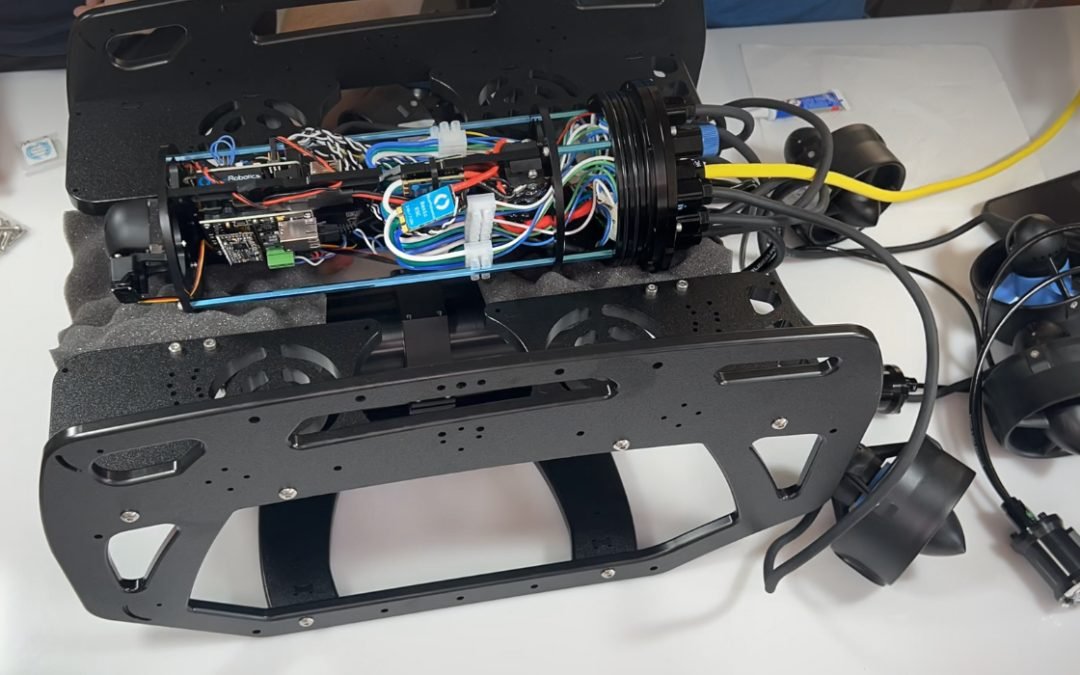
What are the parts of an underwater drone (ROV)?
The use of drones has grown exponentially in recent years. There are currently different types of drones depending on their characteristics, uses or the environment in which they are used. Depending on their use, there are different ROV configurations. However, they all have a series of common components. Have you ever wondered what the parts of an underwater drone or ROV are? If so, seeet's find out what they are.
Components of an underwater drone
The main components that are present in any ROV are:
The structure of the underwater drone
It is the main part of the drone, and is made of materials resistant to water pressure. It is also responsible for protecting the mechanical and electronic components. Therefore, the most commonly used materials are stainless steel and aluminium.
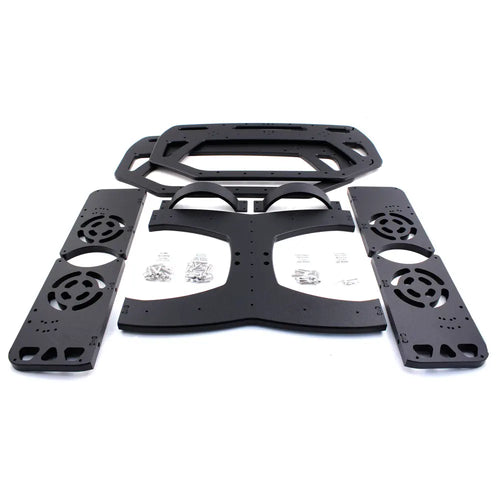
BlueROV2 Underwater Drone Frame from BlueRobotics
Ballast and buoyancy elements in ROVs
The drone must have elements that allow it to have a neutral buoyancy or as close to zero as possible. This means that it should neither submerge nor float, but maintain its depth in a stable manner. For this purpose, weights and buoyancy elements (floats) are added to increase or decrease the buoyancy until the desired value is reached.

Blue Robotics BlueROV2 with ballasts
Thrusters
Son the components responsible for movement. Depending on the number of thrusters the drone has, it will be able to move with greater agility and in a greater number of directions to provide good manoeuvrability. There are different configurations that allow the ROV to have extra thrusters to gain stability or power.
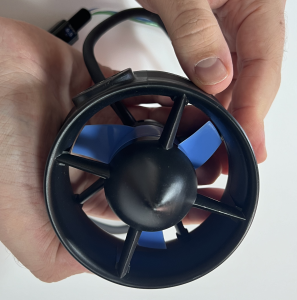
BlueROV2 thruster
Batteries for ROVs
The batteries are responsible for providing the necessary power for all the drone's systems. These batteries are usually lithium polymer (LiPo), because they are small, light and compact.
Depth and buoyancy controllers
Depth sensors measure water pressure, while buoyancy sensors help keep the drone at the chosen depth. They are important because they use this information to keep the drone stable in the water and help with energy efficiency, allowing for lower battery consumption.
Cameras
Underwater drones are usually equipped with at least one camera, the main camera, which is usually designed to capture video or images in real time, and is the one that allows us to navigate as well as take pictures of what we are seeing. It is common for additional cameras to be included in addition to the main camera. offer us different viewing angles and allow us, for example, to triangulate the position of the drone in relation to what we see in order to take measurements..

BlueROV2 Camera
Lighting
A crucial part of underwater visibility is visibility, which is why ROVs or underwater drones have built-in LED torches to ensure adequate illumination.
Accelerometers and gyroscopes
These are the sensors responsible for measuring the drone's acceleration and orientation, and are essential for knowing our position underwater.
Communication system
When we talk about ROVs, we are referring to drones that are connected through an umbilical cable to the station from which we control them on the ground. This cable is responsible for transmitting control data and video between the station and the ROV. However, in the case of AUVs, we are talking about systems that are autonomous, and in this case, we have connections through acoustic probes that allow us to communicate with the device at moderate distances.
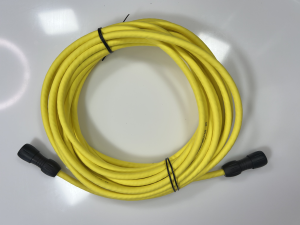
Umbilical cable
Controllers and electronics
The electronics that control the drone must be encapsulated in a watertight container. This is where all components that should not come into contact with water in any way, such as the processing unit, some sensors, or the motor controllers, are placed.
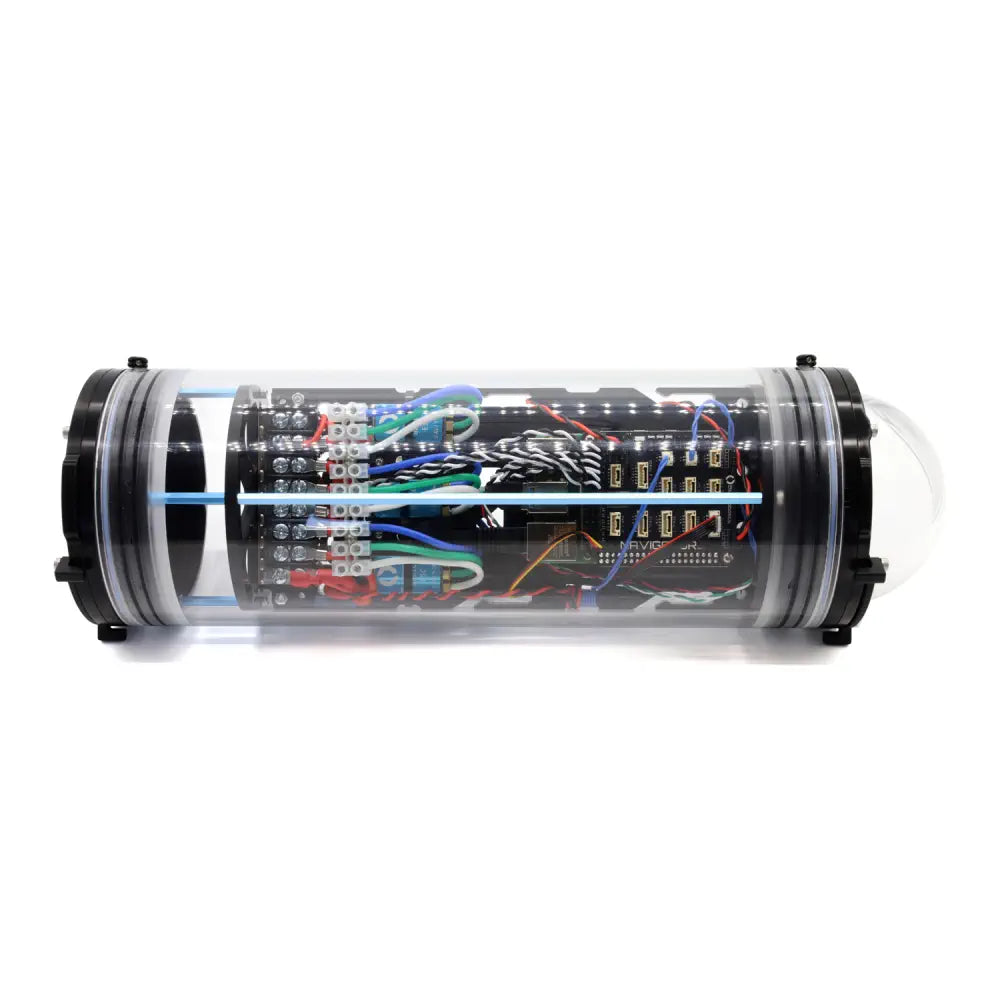
BlueRobotics Aluminium Electronics Box for BlueROV2
Conclusion
These are the common components that any underwater drone should have. However, depending on the model, they may have some additional features, such as the “Manta Ray», a state-of-the-art UAV developed by the US Defense Advanced Research Projects Agency in collaboration with Northrop Grumman.
Blue Robotics ROV BlueRov2
We hope that you have understood the parts of an underwater drone (ROV) and its main uses. If you want to know more about this topic please contact EONSEA.
We hope you liked it!